
Harmoniclast.com: What It Is, What It Covers, and How to Use It


Harmoniclast.com is a family adventure travel guide and blog website. Its homepage presents it as a gateway to family adventures, with sections for family adventures, exploration and discovery, and water adventures. It is not a shop, a travel agency, or a booking site, and no shop, cart, price list, booking form, or payment feature was found on the pages checked.
That distinction is the most useful thing to know first. Readers can use the site to learn about family trips, outdoor activities, water activities, and destination ideas. They cannot book a hotel, a vacation package, or a cruise through it. Any booking still has to be made with a separate provider.
At a Glance
| Question | Short answer |
|---|---|
| --- | --- |
| What is Harmoniclast.com? | A family adventure travel guide and blog site |
| Main focus | Family adventures, outdoor exploration, and water adventures |
| Main categories in navigation | Family Adventures, Exploration and Discovery, and Water Adventures |
| Team named on the About page | Julie Smith, Founder and CEO; Johnathan Doe, Co-Founder; Layla Griffin, Editor |
| Recent article authors checked | Doladen Gelsop, Andy Jones, and Mickey Ford |
| Does it sell trips or book travel? | No shop, booking, or payment feature was found on the pages checked |
| Contact shown | A contact email, with no phone number shown |
| Important limitation | No publication or updated dates were shown on the article pages checked |
Who Is Behind Harmoniclast.com
The About page presents Harmoniclast as the work of a team of passionate adventurers with a deep love for the outdoors, exploration, and family adventures. Its stated mission is to inspire families to escape the everyday, embrace nature, and create lasting memories together. It says the site began as a small blog and grew into a resource for families seeking adventure, guidance, and inspiration.
The same page gives three reasons to choose the site: curated travel guides, family focused content, and a community driven approach. Curated travel guides means guides that are selected and prepared for readers. Family focused content means practical tips, destination recommendations, and fun activities for all ages. Community driven means a community of families sharing their own adventures, tips, and stories.
The About page also names a team. It lists Julie Smith as Founder and CEO, Johnathan Doe as Co-Founder, and Layla Griffin as Editor. The page shows photographs for the team, but it does not show a biography for any of them, and it does not show a founding date, a qualification, or a company registration. That does not make the names false, but it does mean a careful reader should judge the site by the quality, detail, and freshness of its articles, not by the team list alone.
The About page also does not show an email, a phone number, or an address in its main text. Contact details appear elsewhere on the site, in the Contact section and the footer, which is covered later in this article.
What Harmoniclast.com Covers
Harmoniclast.com covers three clear travel areas, and its navigation makes that structure easy to follow.
The first area is family adventures. This is the section for trips and activities that a family can do together, such as waterfront dining, vacation packages, outdoor cooking gear for family camping trips, family water adventures, wilderness family adventures, and managing a home while traveling with a family. It is the main section of the site, and it covers both the fun part of a trip and the practical part, such as planning, packing, and safety.
The second area is exploration and discovery. This is the section for discovering new destinations, learning about different places, and finding new ideas for a trip. It includes cultural weekends, tech travel apps, and other guides that help a reader explore a place in more depth.
The third area is water adventures. This is the section for water based travel, such as swimming, waterfall yoga retreats, cruising with kids, offshore kayak fishing, warm weather water sports, and beach vacations. It is a natural fit for a family travel site, because water activities are often a central part of a family holiday, but they also need the most care with safety, age, and weather.
Together, these three sections give the site a simple logic. A reader can start from the kind of trip they want, whether it is a family trip, a discovery trip, or a water trip, and then look for ideas inside that section. A reader who is not sure yet can browse the homepage, which groups articles under the same three headings, and then narrow down from there.
Recent Content Readers Will Find
The recent articles checked in the Family Adventures section show what the site does best, and also where a reader should be careful.
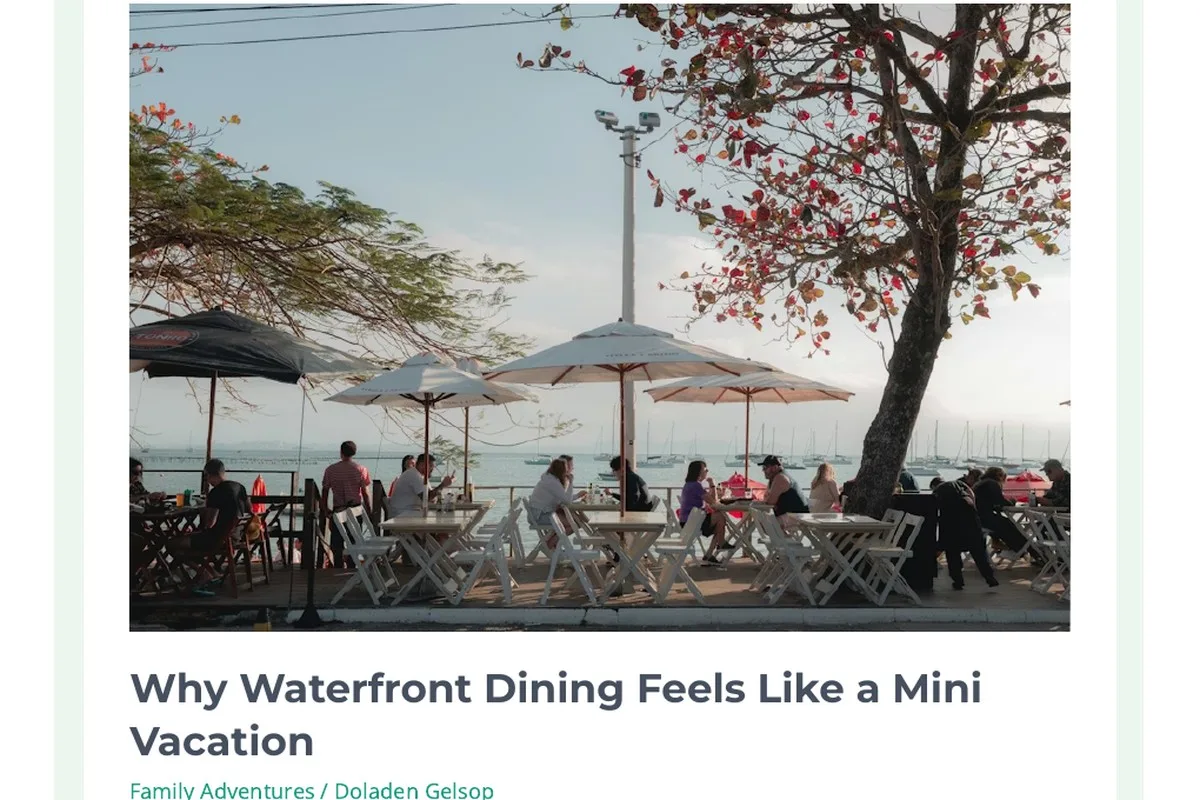
The family focused articles are consistent with the site’s theme. One guide explains why waterfront dining feels like a mini vacation, with a photo of people eating at outdoor tables by the water, and an opening that describes waves, a warm breeze, and a sunset drink. Another guide explains how vacation packages can take the stress out of family travel planning. A third guide covers versatile outdoor cooking gear for family camping trips. A fourth guide covers family water adventures, with fun, safety, and memorable moments. A fifth guide covers adventures of the wilderness family, with nature and family bonds. A sixth guide covers managing a home while traveling the world with a family.
Those six articles, in archive order, were written by Doladen Gelsop, Andy Jones, and Mickey Ford. The archive page shows the author for each article, but it shows no publication or updated date for any of them. The only year visible on those pages is the footer copyright year, and a copyright year is not a publication date, so no date is given for any article in this article.
Other recent content on the homepage is less consistent with the family adventure theme. The Exploration and Discovery section includes a guide to concealed carry while backpacking, and a guide to habitat based heart coherence. Those topics do not fit a family adventure guide in the same way as camping, water safety, or destination planning, and a reader should check the article itself before trusting a result based only on its section label.
The Water Adventures section is more consistent. It includes a guide to waterfall yoga retreats, a guide to cruising with kids, a guide to food to bring on an offshore kayak fishing trip, a guide to warm weather water sports, and a guide to swimming in Rome. Those titles fit the water theme, and they show that the site covers both relaxing water activities, such as a yoga retreat, and active water activities, such as kayaking and water sports.
How Articles on Harmoniclast.com Are Structured
A typical article page checked starts with a clear title, a category label, and an author byline. That opening helps a reader judge relevance in seconds. If the title, category, and author do not match what the reader needs, there is no need to read further.
The waterfront dining article checked also shows a large featured image at the top, with people eating at outdoor tables by the water, followed by the title and byline, and then an introduction that explains why a meal near water can feel like a mini vacation. That structure helps a longer guide feel manageable, because a reader can see the topic, the setting, and the reason for the guide before committing to the full read.
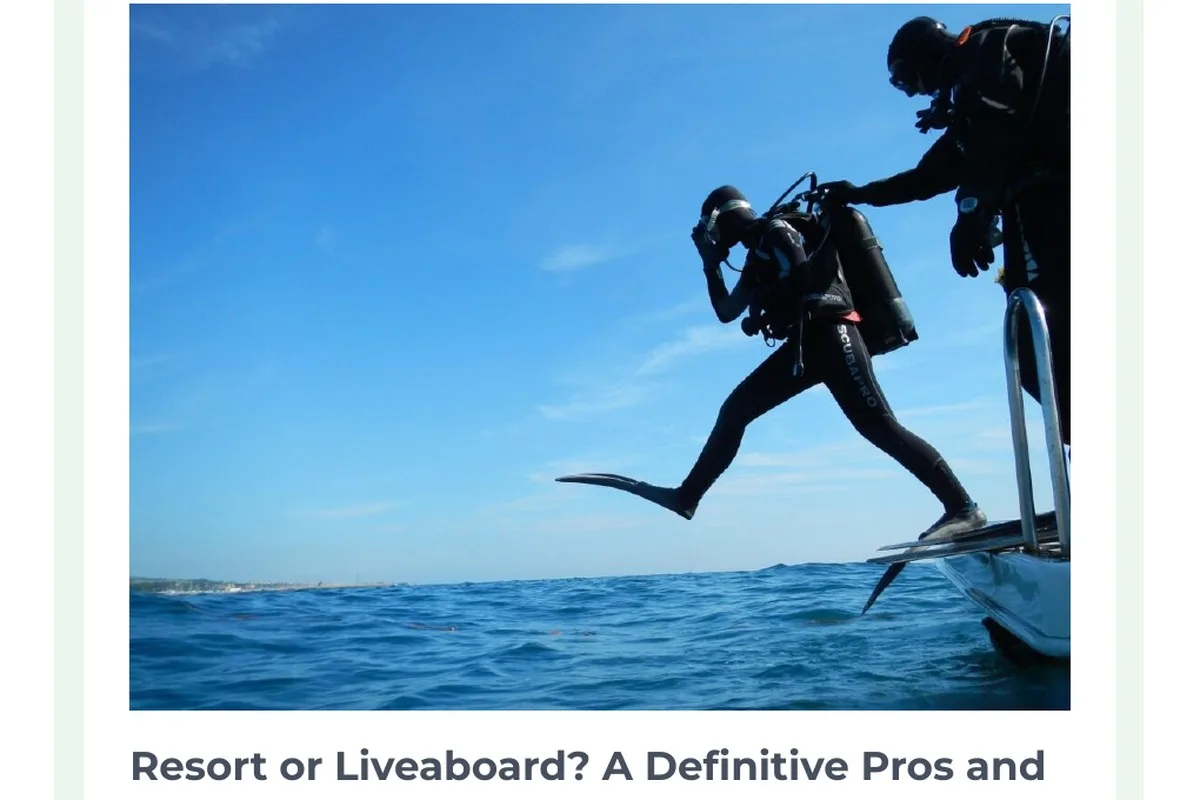
The Water Adventures archive checked shows a similar structure for its articles. One card shows two scuba divers entering the sea from a boat, with the title of a guide that compares a resort and a liveaboard for a Maldives vacation, and an introduction that explains the planning choice a reader faces. That card makes the choice clear at once: the reader must decide between two ways to experience the same destination, and the guide promises a pros and cons list to help with that choice.
This structure gives a reader a simple quality test. A useful article should name its topic, explain its advice in order, give realistic examples, and note limits. A weaker article would only praise a destination, a package, or an activity, without explaining cost, safety, timing, age, or when another choice would be better.
Readers should apply that test with extra care here, because the article pages checked show no publication or updated date. An undated guide can still be useful for a stable idea, such as how to plan a family trip, but it is a weaker source for prices, package details, opening hours, safety rules, or any fact that changes often.
How to Use Harmoniclast.com Well
Start by choosing which side of the site you need. If you need a family trip idea, start with Family Adventures. If you need a new destination or a new way to explore, start with Exploration and Discovery. If you need a water activity, start with Water Adventures.
Read an article in three passes:
- First, check the topic. Does the title, category, and opening match what you actually need, or is it a general guide inside a family section, or a niche topic inside an exploration section?
- Second, look for the practical part. Does it explain planning, packing, safety, cost, or timing in enough detail to use in real life?
- Third, check for limits. Does it say when an activity is not suitable for a child, when water safety matters most, when a package does not include something, or when a different option would be better?
For family trip decisions, use the site in a similar way, but with one extra step. Use it to shortlist a type of trip, a type of activity, or a type of place, then confirm the practical facts elsewhere. A family travel guide can help a reader discover a waterfront restaurant, a camping trip, or a cruise with kids, but it cannot confirm that a package is available, that a price is current, that a hotel is suitable for a child, or that a water activity is safe on a specific date.
A common mistake is to treat a blog guide as a booking confirmation, a safety certificate, or a purchase confirmation. Reading about a vacation package does not make a trip booked, and reading about a water adventure does not make it safe for every child. Both are starting points, not final proof.
What Harmoniclast.com Does Not Do
Harmoniclast.com does not sell trips, book hotels, or take payment on the pages checked. It has no shop, cart, or checkout flow for itself. Its articles may contain outbound links to other sites, such as vacation package pages, but those links are not an on site purchase flow, and the site itself does not complete a booking.
It also does not present itself as a safety authority. Its water content includes family water adventures, swimming, cruising with kids, and water sports, but the pages checked do not show a safety qualification, a medical review, or a named safety professional for that content. Readers should therefore treat water advice as general information, not as a safety guarantee, and should check water safety with a qualified source before entering the water with children.
The Contact page shows a contact email, info@harmoniclast.com, and an address in the footer. It does not show a phone number on the pages checked, and it does not show a personal contact name on the Contact page itself. The page also shows a heading for leaving a message, but no usable form fields rendered in the page view observed during the research for this article. A reader should therefore use the contact email shown on that page if they need to reach the site, rather than assuming a working form is available.
Strengths and Limitations
The main strength is clarity of focus. Three travel categories, a simple navigation menu, and article pages with a title, category, and author make the site easy to browse. The family adventure content checked was consistent with its section, and the waterfront dining article checked explained its idea in a clear and vivid way.
The homepage also shows fun facts, with 500 plus destination guides, 50 plus expert contributors, and 10,000 plus happy travelers. Those numbers are the site’s own claims, and they were not verified from an independent source in the research for this article. A reader should treat them as the site’s own marketing, not as independent proof of size or quality.
The main limitations are date transparency, contact transparency, and content consistency. Article pages checked show no publication or updated date, so freshness cannot be checked at a glance. The footer shows a copyright year, but a copyright year is not the same as an article date, and it should not be used as proof that an article is current. No phone number is shown. The Contact page form did not render in the observed view. An address is listed in the footer, but the pages checked do not explain whether that address is an office, a mailing address, or another kind of listing, so readers should not treat it as proof of a physical place they can visit.
Another limitation is the mixed content in the Exploration and Discovery section. A guide to concealed carry while backpacking and a guide to habitat based heart coherence do not fit a family adventure theme in the same way as the other guides, and a reader who trusts a category label without opening the article could be misled. A site that wants to build trust should keep its sections clearly separated, or explain clearly why a niche topic belongs there.
A final limitation is the risk of overgeneralisation. A family trip that works well for one family, with one age range, one budget, and one level of experience, may not work the same way for another. A water activity that is safe for one child may not be safe for another. A good reader will therefore look for conditions in each article, such as age, swimming ability, weather, cost, and personal limits, rather than applying a single rule to every family.
Practical Advice for Readers
Use Harmoniclast.com for:
- Discovering family trip ideas, from waterfront dining to wilderness family adventures
- Learning what to pack, plan, and check for a family camping trip, including versatile outdoor cooking gear
- Getting practical ideas for water adventures, from swimming and cruising with kids to waterfall yoga retreats
- Comparing trip styles before planning in more detail, such as a resort and a liveaboard for the same destination
Do not use it alone for:
- Final prices, package details, availability, or booking changes, because it does not sell trips or travel
- Water safety decisions, without a qualified water safety source where safety matters
- A claim that a destination, package, or activity is the best option, without checking independent sources
- A claim that a trip is suitable for a child of a certain age, without checking the provider and the child’s own ability
A practical rule works well here. If a decision involves money, dates, safety, or children, confirm it in at least one other current and qualified place, such as the provider, the hotel, an official tourism source, or a recognised guide to water safety and camping. A family travel guide can help you plan a trip, and an active trip idea can help you choose an activity, but neither one replaces a current check with the provider. The same care applies to cost: a simple comparison can help you keep a trip affordable, but only a current price check can confirm what a trip will actually cost.
Frequently Asked Questions
What is Harmoniclast.com?
Harmoniclast.com is a family adventure travel guide and blog website. It publishes guides about family adventures, exploration and discovery, and water adventures, and it does not sell trips or book travel on the pages checked.
Is Harmoniclast.com a travel agency?
No. No shop, cart, price list, or payment feature was found on the pages checked. It is a guide and information site, and any booking must be made with a separate provider.
Who runs Harmoniclast.com?
The site presents itself as the work of a team of passionate adventurers. Its About page also names Julie Smith as Founder and CEO, Johnathan Doe as Co-Founder, and Layla Griffin as Editor. No biography, founding date, or phone number was shown on the pages checked.
What topics does Harmoniclast.com cover?
It covers family adventures, exploration and discovery, and water adventures. Recent content checked included waterfront dining, vacation packages, outdoor cooking gear for family camping trips, family water adventures, wilderness family adventures, cruising with kids, waterfall yoga retreats, and swimming in Rome. Its Exploration and Discovery section also includes some topics that do not fit the family theme as clearly.
Can I contact Harmoniclast.com?
Yes, through its Contact page, which shows a contact email and an address in the footer. No phone number was shown on the Contact page or in the footer sections checked, and no form fields rendered in the page view observed, so email is the contact route shown.
Should I rely on Harmoniclast.com alone for a family trip or a water activity?
No. Use it for ideas, trip types, and planning context, then confirm prices, package details, availability, dates, and any safety critical detail with a current provider or a qualified safety source. This is especially important because article pages checked show no publication or updated dates.
Final Takeaway
Harmoniclast.com works best as a learning and discovery site. Its clearest value is in grouping family trip ideas by use, so a reader can start from family adventures, exploration, or water adventures and then narrow down to a useful guide.
Its value drops when it is treated as a travel agency, a safety authority, or a final authority on current prices, packages, or safety rules. Used with that limit in mind, and checked against a current source for any paid or safety critical decision, it can save research time and help a family think more clearly about which trip, or which water activity, actually fits their children, their budget, and their level of experience.


Travelsfornow.com: What It Is, What It Covers, and How to Use It
Learn what Travelsfornow.com covers, who runs it, and how to use its budget travel guides when planning a cheaper trip.
Travel Tweaks Hotels: How TravelTweaks.com Helps You Find Better Deals, Upgrades, and Smarter Hotel Stays
Travel Tweaks Hotels on traveltweaks.com: what the hotel search tool does, how to compare rates and get upgrades, the 10 hotel hacks grouped as the site shows them, and what the site does not do.
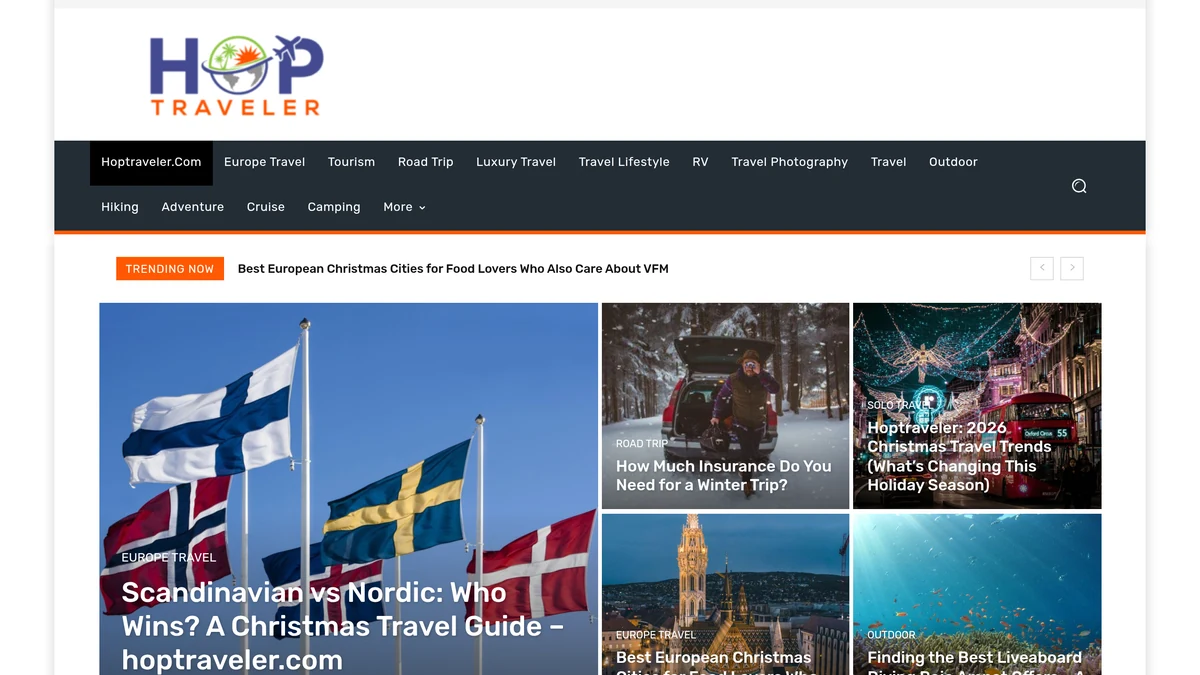
Hoptraveler.com: A Complete Guide to the Travel Blog, Its Categories, and How to Use It
Hoptraveler.com is a travel news and guide blog with 14 categories and thousands of articles. Learn what it covers and how to use it for trip planning.