
Robustarea.com: What It Is, What It Covers, and How to Use It


Robustarea.com is a travel and culinary blog and guide website. It publishes destination ideas and detailed culinary technique articles. It is not a shop, a travel agency, or a booking site, and no cart, price list, booking form, or payment feature was found on the pages checked.
That distinction is the most useful thing to know first. Readers can use the site to learn, plan, and explore ideas. They cannot book a trip, buy a product, or resolve a booking through it. Any paid decision still has to be made with a separate provider.
At a Glance
| Question | Short answer |
|---|---|
| What is Robustarea.com? | A travel and culinary blog and guide site |
| Main focus | Lesser known travel destinations, plus culinary definitions and techniques |
| Main categories in navigation | Culinary Capitals, Hidden Gems, and Adventure Havens |
| Destinations highlighted on the homepage | Bora Bora, Amalfi Coast, Kyoto, Santorini, Machu Picchu, and Bali |
| Recent article author | Solalen Kenjik, for the recent Culinary Capitals articles checked |
| Does it sell or book travel? | No shop, booking, or payment feature was found on the pages checked |
| Contact shown | A contact form and a contact email, with no phone number shown |
| Important limitation | No publication or updated dates were shown on the recent article pages checked |
Who Is Behind Robustarea.com
The site presents itself as the work of a team of passionate travellers, not as the project of one named founder. Its About section explains that the team wanted to share a love of adventure and discovery with readers.
Its stated mission is to showcase lesser known and off the beaten path destinations. Its stated goal is to give readers unique and authentic experiences that go beyond typical tourist hotspots. Its listed core values are diversity, cultural exchange, and sustainability.
No individual owner or founder name was shown on the About page. No phone number was shown on the About, Contact, or footer sections checked. A footer address is listed on the site, but the pages checked do not explain whether that address is an office, a mailing address, or a registration detail, so readers should not treat it as proof of a physical place they can visit.
This level of transparency is common for a small blog, but it is a limit for readers who want to verify a person, a company, or a place before trusting a recommendation. In that case, the article itself, its detail, and its date matter more than the name behind it.
What Robustarea.com Covers
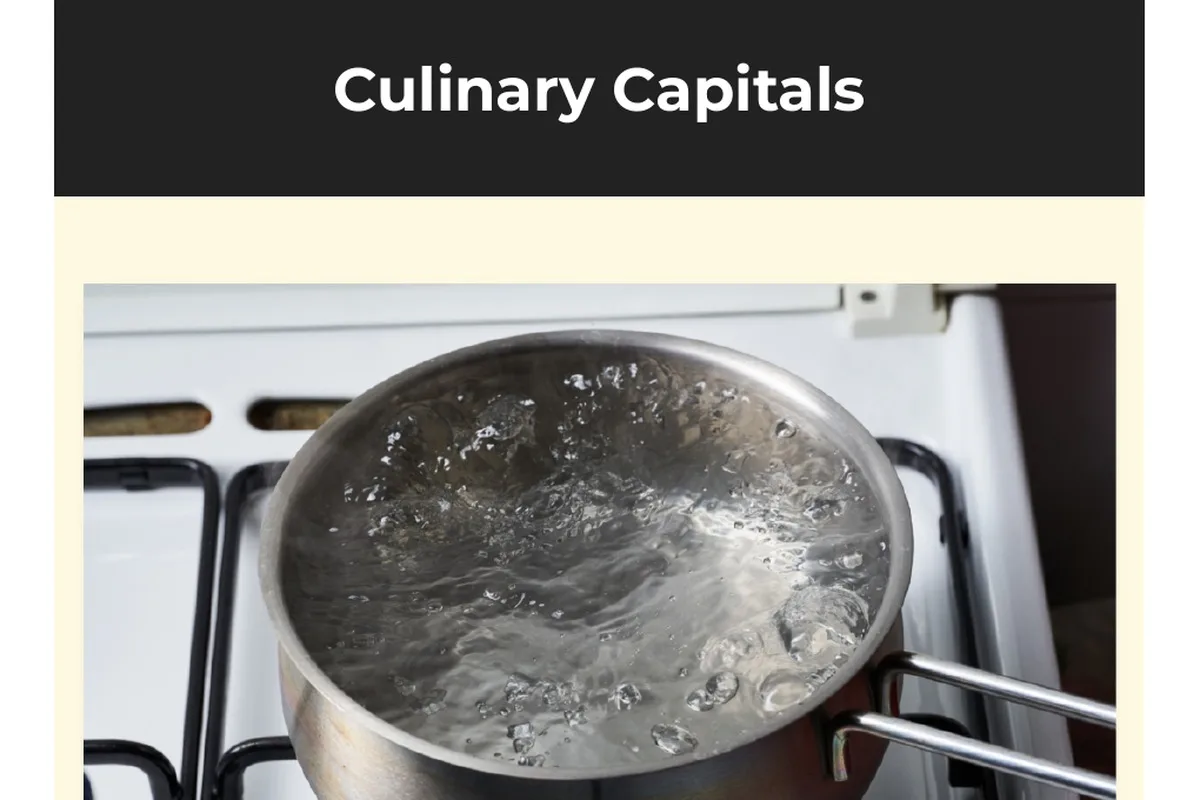
Robustarea.com covers two related but different subjects, and readers should not confuse them.
The first subject is travel destinations. The homepage presents well known and inspiring places, including Bora Bora, Amalfi Coast, Kyoto, Santorini, Machu Picchu, and Bali, alongside sections for discovering places that inspire readers and for new destinations. The navigation also points to Hidden Gems and Adventure Havens, which fit the site’s stated focus on places beyond the usual hotspots.
The second subject is culinary knowledge. This is where the most recent content checked is concentrated. The Culinary Capitals section explains cooking terms, techniques, and kitchen systems in detail, rather than offering a short list of recipes.
Together, these two sides make sense for a reader who likes both travel and food. A destination can lead to an interest in its cuisine, and a cooking technique can lead to an interest in the place where it developed. The site does not, however, present a single trip that combines both sides in one booking, because it does not sell trips at all.
Recent Content Readers Will Find
The recent articles checked all sit in Culinary Capitals and all carry the same author name, Solalen Kenjik. No publication or updated date was shown on those article pages, so a reader cannot tell from the page alone how current each guide is. That point matters, and it is covered again in the limitations section.
The recent topics include:
- Boiling techniques, including how boiling works, why it preserves nutrients in some foods, and how it is used in global cuisines
- Culinary creativity, including what culinary arts mean, how they developed, their main components, and their impact on society
- Slurry in cooking, including what a slurry is, which starch ingredients are commonly used, how to make one, and how it thickens sauces, soups, and gravies
- Aroma in cooking, including aromatics such as mirepoix, soffritto, and sofrito, their role in flavour, and how they are paired and blended across cuisines
- Chop techniques, including what a chop means in cooking, how different techniques work, how to choose a meat cut, and how chop dishes vary across Asian, European, American, and Middle Eastern cuisines
- The kitchen brigade system, including its origins, its modern structure, how it varies across cuisines, and why professional kitchens use it
This list shows a clear pattern. The site is strongest when it explains a term or a technique from first principles, gives its background, and then shows practical uses. A reader who is new to a term will usually find a definition, a reason it matters, and examples in the same article.
How Articles on Robustarea.com Are Structured
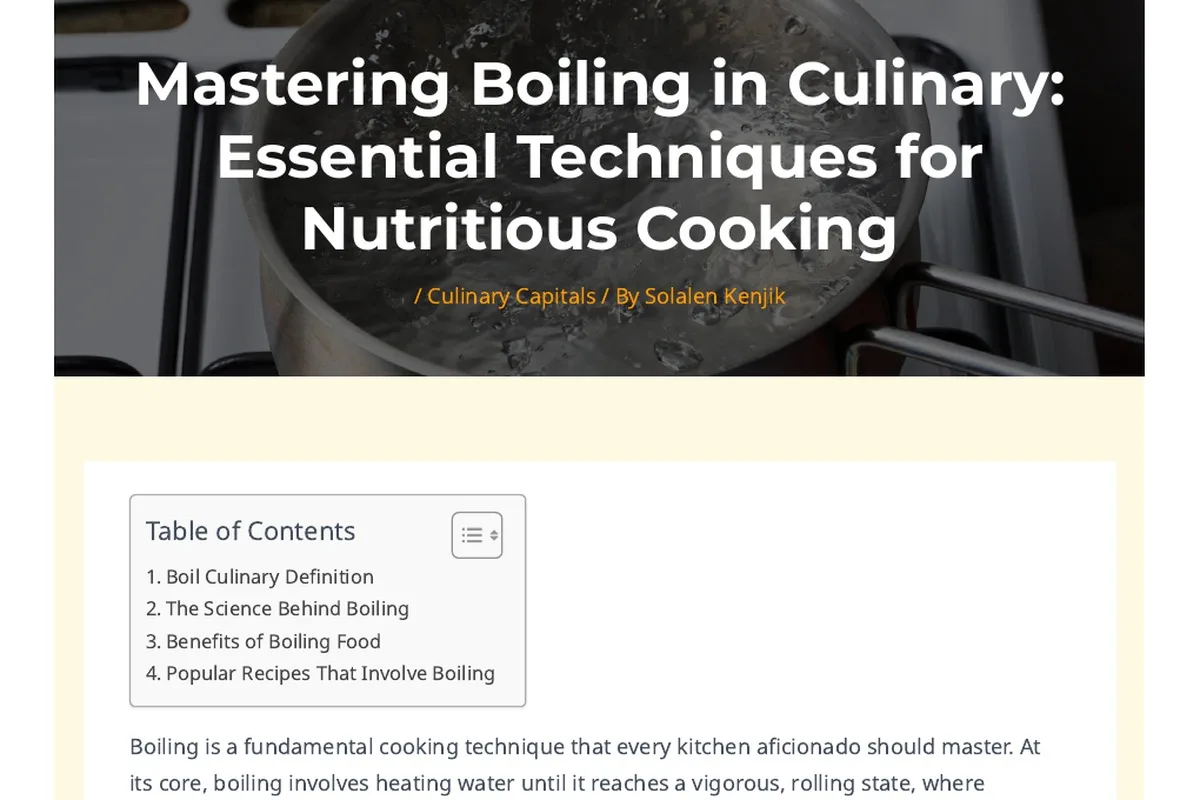
A typical recent article starts with a clear title and a category and author byline, then a table of contents. That structure helps a reader scan before committing to a long read.
The boiling article is a good example of the pattern. It opens with a definition, then moves to the science behind boiling, the benefits of boiling food, and popular dishes that involve boiling. A reader can therefore use the same article in three ways: to learn the term, to understand why the method works, and to find ideas for using it.
This structure also helps a reader judge quality quickly. A useful article should name the technique, explain the mechanism in plain language, give realistic examples, and note limits. A weaker article would only praise a technique without explaining when it fails, when another method is better, or what can go wrong.
Readers should use that test on every article, because the site does not show dates on the pages checked. An undated guide can still be useful for a stable technique, such as how a slurry thickens a sauce, but it is a weaker source for travel prices, opening times, visa rules, or any fact that changes often.
How to Use Robustarea.com Well
Start by choosing which side of the site you need. If you need a destination idea, start with the destination sections and the homepage destination lists. If you need to understand a cooking term or technique, start with Culinary Capitals.
Read a culinary article in three passes:
- First, check the definition. Does it explain the term in a way you could repeat in your own words?
- Second, look for the practical part. Does it explain steps, ingredients, pairings, or kitchen roles in enough detail to use in a real kitchen?
- Third, check for limits. Does it say when a technique is not suitable, when heat or timing matters, or when a different method gives a better result?
For travel, use the site in a similar way, but with one extra step. Use it to shortlist a place or a type of trip, then confirm the practical facts elsewhere. The site can help a reader discover a lesser known destination or think about a trip differently, but it cannot confirm that a hotel is open, a route is running, or a price is current on a specific date.
A common mistake is to treat a blog guide as a professional qualification or a booking confirmation. Reading about the brigade system does not make a reader a professional chef, and reading about a destination does not make a trip booked. Both are starting points, not final proof.
What Robustarea.com Does Not Do
Robustarea.com does not sell, book, or take payment for travel on the pages checked. It has no shop, cart, or checkout flow for itself.
It also does not present itself as a single author expert service. Its About section describes a team, and its recent culinary articles use one author name, but the pages checked do not give a full biography, qualification, or contact name for that author. Readers should therefore judge the work by its accuracy and detail, not by a credential that is not shown.
The contact page does render a form, with fields for first name, last name, email, message, and website, plus a send button. It also shows a contact email. That makes general contact easier than on many small blogs, but it does not replace a phone line, a booking desk, or a support team for a paid service, because the site does not offer a paid service on the pages checked.
Strengths and Limitations
The main strength is clarity of focus in its recent work. Culinary articles explain terms and techniques in a structured way, with definitions, background, and practical examples in the same place. The travel side adds a second reason to visit the site, for readers who want destination ideas as well as food knowledge.
The main limitations are date transparency, personal transparency, and scope. Article pages checked show no publication or updated date, so freshness cannot be checked at a glance. No founder name or phone number is shown. The travel sections are broader and less detailed in the pages checked than the culinary technique articles, so a reader looking for a complete travel plan will need other sources.
Another limitation is the risk of overgeneralisation. A technique that works well for one dish, one cut of meat, or one cuisine may not work the same way for another. A good reader will therefore look for the conditions in each article, such as heat, timing, ingredient choice, and dish type, rather than applying a single rule to every case.
Practical Advice for Readers
Use Robustarea.com for:
- Learning cooking terms and techniques, such as boiling, slurry, aroma bases, chop methods, and the brigade system
- Understanding why a technique works, not just what to do
- Discovering lesser known destinations and thinking about trips beyond typical hotspots
- Comparing trip styles and food ideas before planning in more detail
Do not use it alone for:
- Final travel prices, availability, opening times, or entry rules
- Booking changes, refunds, or complaints, because it does not sell travel
- Professional kitchen training or food safety decisions, without a qualified source where safety matters
- A claim that a destination, technique, or dish is the best option, without checking independent sources
A practical rule works well here. If a decision involves money, dates, safety, or a professional kitchen, confirm it in at least one other current and qualified place, such as the provider, an official tourism source, or a recognised food safety guide.
Frequently Asked Questions
What is Robustarea.com?
Robustarea.com is a travel and culinary blog and guide website. It publishes destination ideas and detailed culinary technique articles, and it does not sell or book travel on the pages checked.
Is Robustarea.com a travel agency?
No. No shop, booking, or payment feature was found on the pages checked. It is a guide and information site, and any booking must be made with a separate provider.
Who runs Robustarea.com?
The site presents itself as the work of a team of passionate travellers. No individual founder name was shown on the About page, and no phone number was shown on the pages checked.
What topics does Robustarea.com cover?
It covers travel destinations, including Bora Bora, Amalfi Coast, Kyoto, Santorini, Machu Picchu, and Bali, plus culinary topics such as boiling, slurry, aroma, chop techniques, culinary creativity, and the kitchen brigade system. Its navigation also includes Hidden Gems and Adventure Havens.
Can I contact Robustarea.com?
Yes, through its contact page, which shows a contact form and a contact email. No phone number was shown on the Contact page or in the footer sections checked.
Should I rely on Robustarea.com alone for a trip or a cooking decision?
No. Use it for ideas, definitions, techniques, and planning context, then confirm prices, availability, dates, entry rules, and any safety critical cooking detail with a current provider or qualified source. This is especially important because recent article pages checked show no publication or updated dates.
Final Takeaway
Robustarea.com works best as a learning and discovery site. Its clearest value is in explaining culinary terms and techniques in a structured way, and in pointing readers toward destinations beyond the usual hotspots.
Its value drops when it is treated as a booking site, a company directory, or a final authority on current prices, dates, or safety rules. Used with that limit in mind, and checked against a current source for any paid or safety critical decision, it can save research time and help a reader understand both a place and its food in more depth.

Travelnester.co.uk: What It Is, What It Covers, and How to Use It
Learn what Travelnester.co.uk covers, who it appears to serve, what it does not do, and how to use its travel guides safely for trip planning.
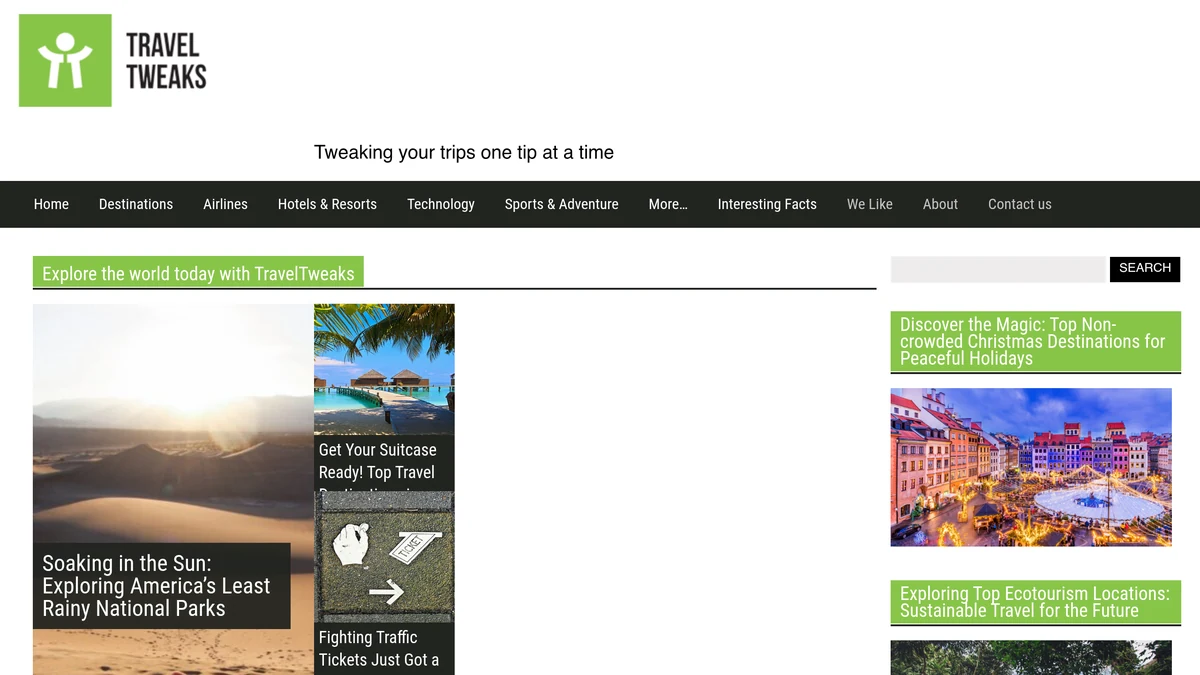
Travel Tweaks Hotels: How TravelTweaks.com Helps You Find Better Deals, Upgrades, and Smarter Hotel Stays
Travel Tweaks Hotels on traveltweaks.com: what the hotel search tool does, how to compare rates and get upgrades, the 10 hotel hacks grouped as the site shows them, and what the site does not do.
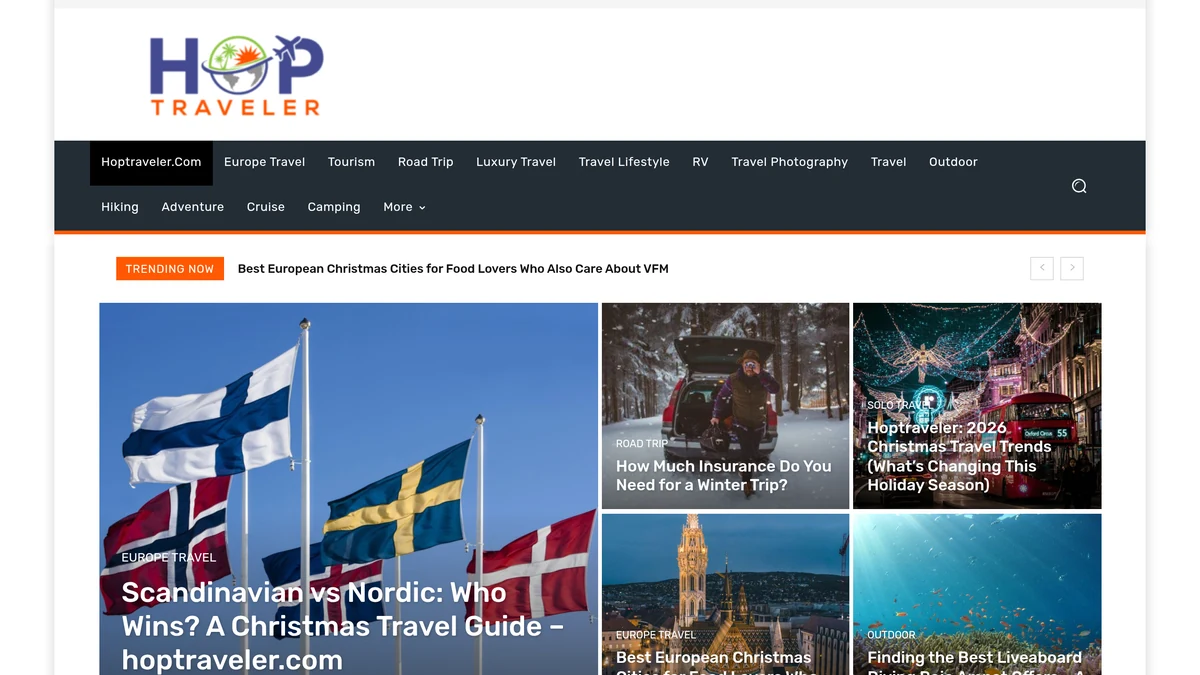
Hoptraveler.com: A Complete Guide to the Travel Blog, Its Categories, and How to Use It
Hoptraveler.com is a travel news and guide blog with 14 categories and thousands of articles. Learn what it covers and how to use it for trip planning.